 Siddharth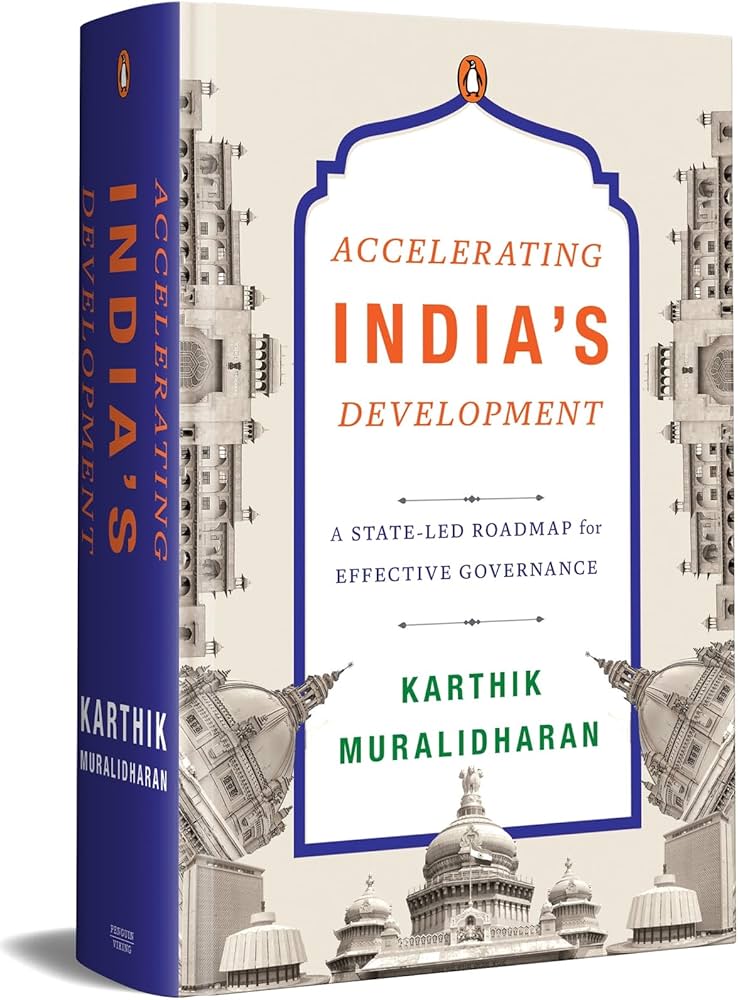
We, Indians, often complain—rightly so—about the poor quality of life and the sad state of affairs (or is it the sad affairs of the state?) around us. Our education system produces some of the most brilliant students anywhere in the world, yet more than 75 years after Independence, we have still not achieved universal literacy. Our healthcare system is so overburdened that news reports of patients dying due to systemic failures are disturbingly common. Public safety, anecdotally, appears to be in God’s hands, with the police often perceived as corrupt. The judicial system is crippled by millions of pending cases. Politicians and bureaucrats, of course, are generally considered corrupt—much like everything else associated with the government.
The privatization of education, healthcare, security, and even access to clean water and air has disproportionately benefited those who can afford them. But what about the millions who cannot?
Economics has a well-known saying: there is no free lunch. One of the most enduring debates in development economics concerns which of the two broad models India should follow. The first is the Western model, in which a nation focuses on increasing the size of the economic pie (for example, GDP growth) before redistributing it through welfare schemes such as subsidies, affordable healthcare, and free rations. In this model, a country becomes wealthy first—often at the cost of significant inequality—and only later attempts redistribution. Notably, this model evolved in societies where voting rights were historically restricted to elites.
The second model focuses on redistributing the pie as it grows. While this approach is more inclusive and caters to a broader segment of society, it comes at the cost of reduced capital accumulation and potentially slower future growth. In many ways, this has been India’s economic trajectory—shaped by universal adult franchise from the very beginning and reinforced by vote-bank politics.
But with economists so focused on these two extremes, are we missing other, deeper structural problems in our economy?
Earlier this semester, I bought Karthik Muralidharan’s Accelerating India’s Development: A State-Led Roadmap for Effective Governance. I began reading it but soon realized that an unusually busy semester would prevent me from doing justice to such a well-researched text in fragmented sittings. I therefore set it aside for the end of the term and returned to it only in the past week.
In the interim, Karthik visited Plaksha University last month to speak about the book. Having known him for over seven years—since attending his talks at UC San Diego—it was a pleasure to once again witness his irrepressible and infectious energy. His rapid-fire delivery is matched only by his quick wit. Even before finishing the book, it was a privilege to engage with him on its themes and watch him distill its core arguments into a compelling one-hour talk—something only he could pull off.
One of the first things that struck me while reading the book was its accessibility. Despite being a 600-page tome (with another 200 pages of references), the writing is remarkably comprehensible—even for an economics novice like me. Bringing such complex material to a general audience is an achievement in itself. As the book repeatedly emphasizes, policy reforms can only succeed if voters—the general public—are able to understand and appreciate them.
The book is structured into four sections—key actors, building an effective state, accelerating India’s development, and making it happen—which together weave a coherent narrative around problems, evidence, and solutions. Each chapter is rich with easily digestible data across sectors such as healthcare, education, law and order, and the judiciary. Many insights are striking—for instance, how poorly India performs in empowering local governments compared to other countries, including China, and the vast pay disparities between public and private sector teachers.
What is particularly remarkable is the book’s lack of ideological baggage. Instead, it adopts a rigorously data-driven approach, drawing on experiments and empirical evidence accumulated over the past two decades.
As I worked my way through the book, I found myself frequently highlighting passages and scribbling notes in the margins. If I had to pick just one illustration that encapsulates its spirit, it would be the graph characterizing India’s welfare and subsidy spending by equity and efficiency impacts (Chapter 15, p. 459). By placing government schemes on a two-dimensional plane, the graph offers a powerful framework for assessing their effectiveness—and exposes how fiscally disastrous some of them truly are.
Two other ideas that particularly stood out were the 70:20:10 funding formula (introduced on p. 189 and referenced throughout) and the proposal for ranked-choice voting (RCV) as an alternative to first-past-the-post elections (p. 543). The former argues for decentralizing funds to improve outcomes, while the latter seeks to incentivize better political candidates by changing electoral incentives. The book also makes a compelling case—supported by data—that a well-functioning public sector can force private alternatives to improve through competition.
The text is further enlivened by anecdotes and humor, making it a genuinely enjoyable read. Lines such as an Indian lobbyist admitting, “However much you pay me, I cannot guarantee that I can get your job done. What I can guarantee is stopping your rival’s project!” (p. 18), or observations like “Everyone wants decentralization, but only until his level” (p. 258), and “Madam, aapko asliyat se itna lagaav kyun hai?” (p. 113) add both levity and insight. Apart from some repetition in Chapters 11 and 12, the book remains consistently illuminating.
At its core, the book argues that India need not choose between the two traditional models of economic development. Even modest, well-designed tweaks to existing policies could significantly reduce waste and corruption while delivering substantial long-term gains. Without taking ideological sides, the book suggests that there might be some free lunch after all.
Having finished the book yesterday, I found myself wondering whether our politicians were engaging with any of these ideas. Almost immediately, a notification popped up on my X feed quoting Sonia Gandhi’s speech in the Rajya Sabha: “I urge the Government to… appoint an additional ASHA worker in villages with a population greater than 2,500 and double the number of Anganwadi workers to enable early childhood education in addition to existing nutrition and health initiatives.”
Having just read about these very recommendations—along with evidence of their impact from field experiments—I couldn’t help but smile.
 For the Class I Will Always Remember